Strengthening Stakeholder Engagement for SBC Interventions in Bhola
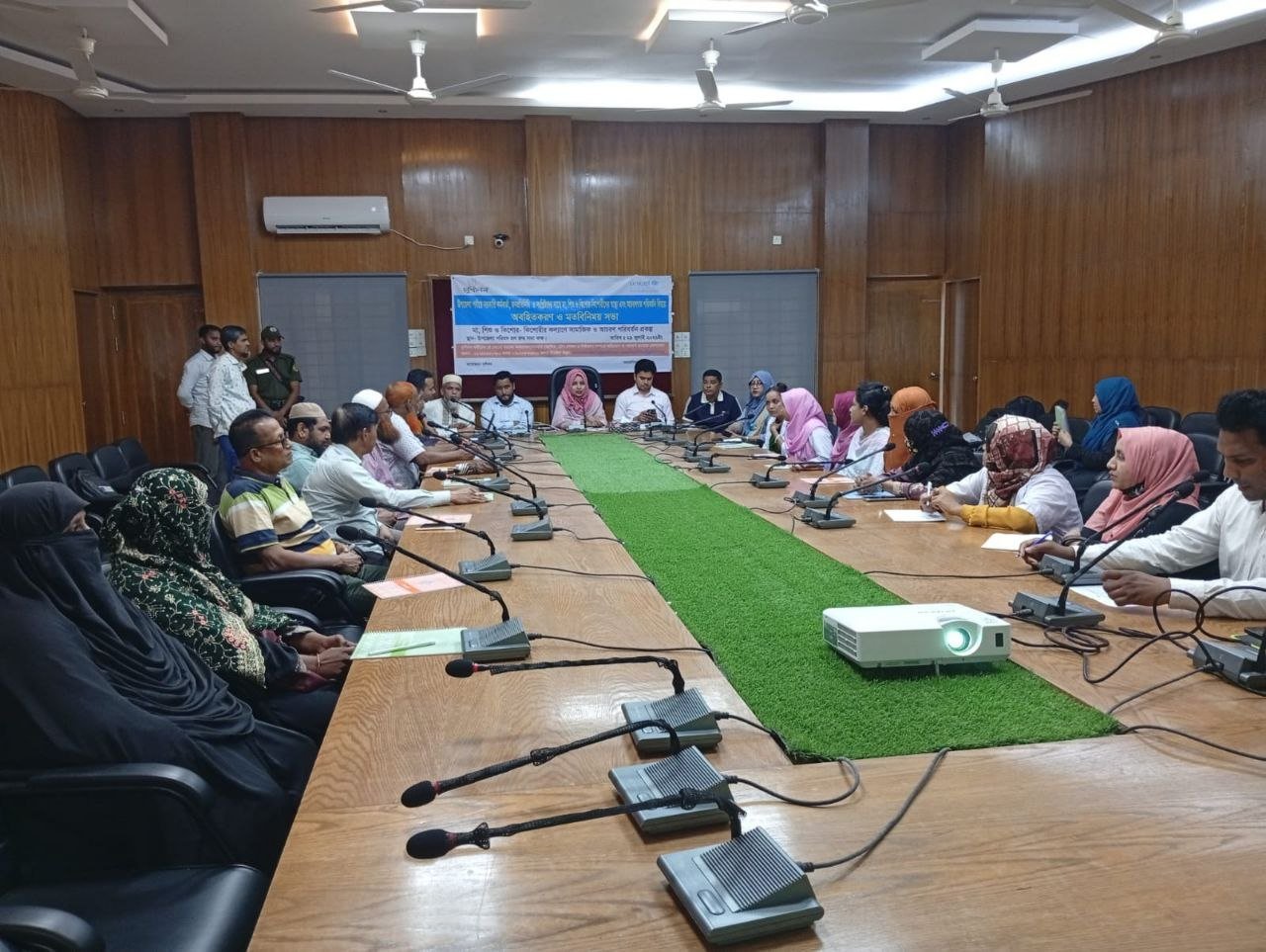
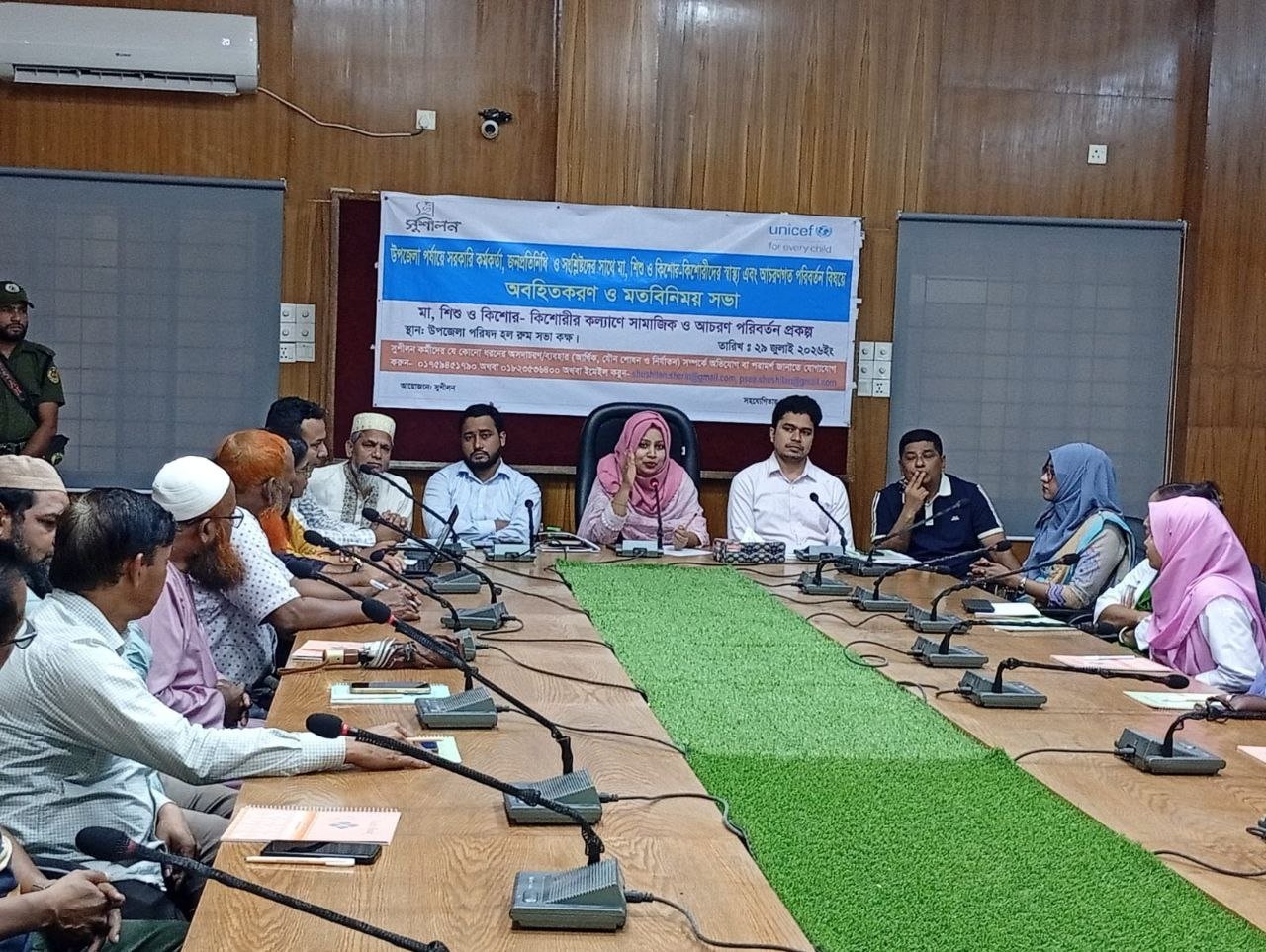
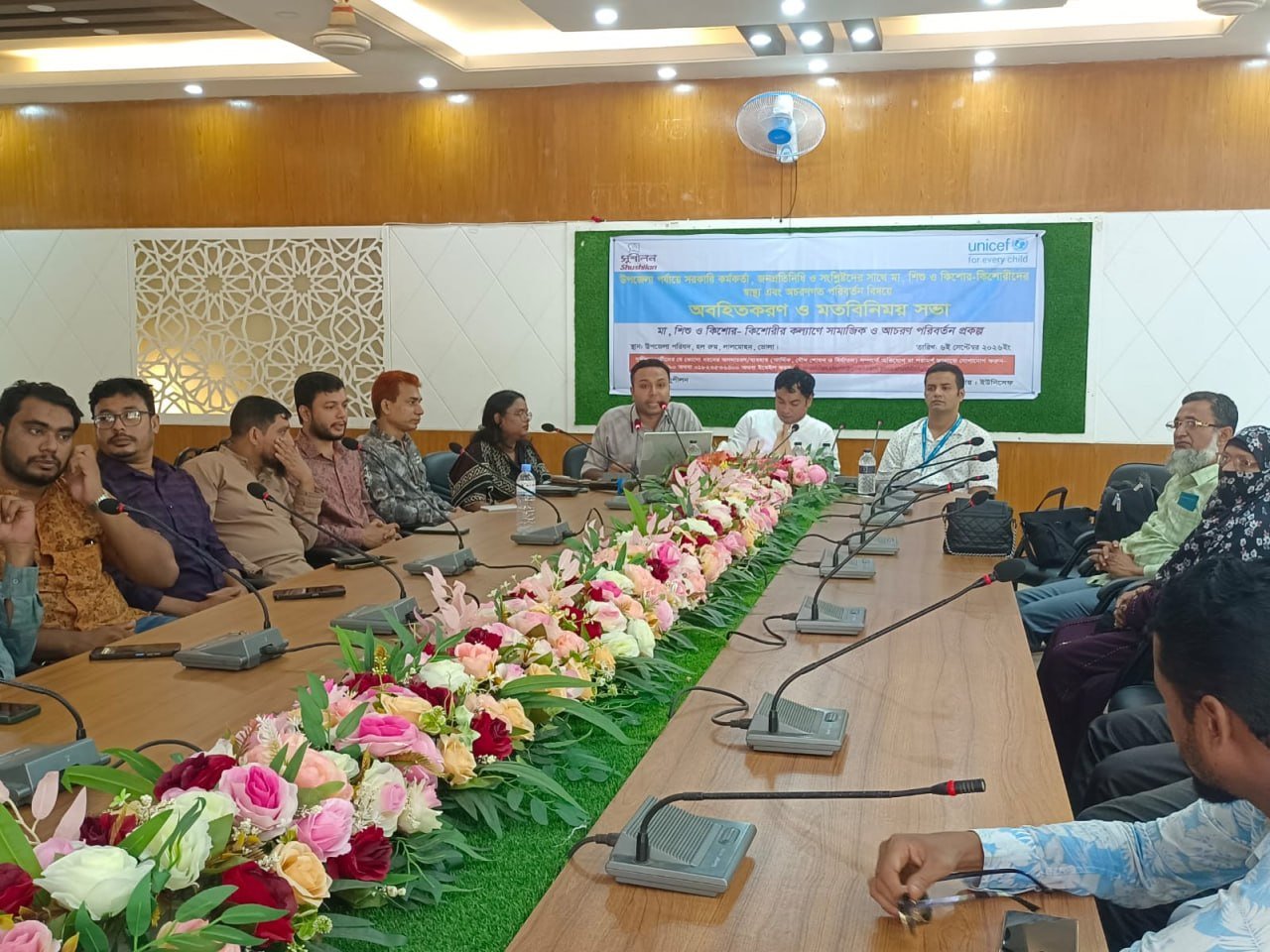
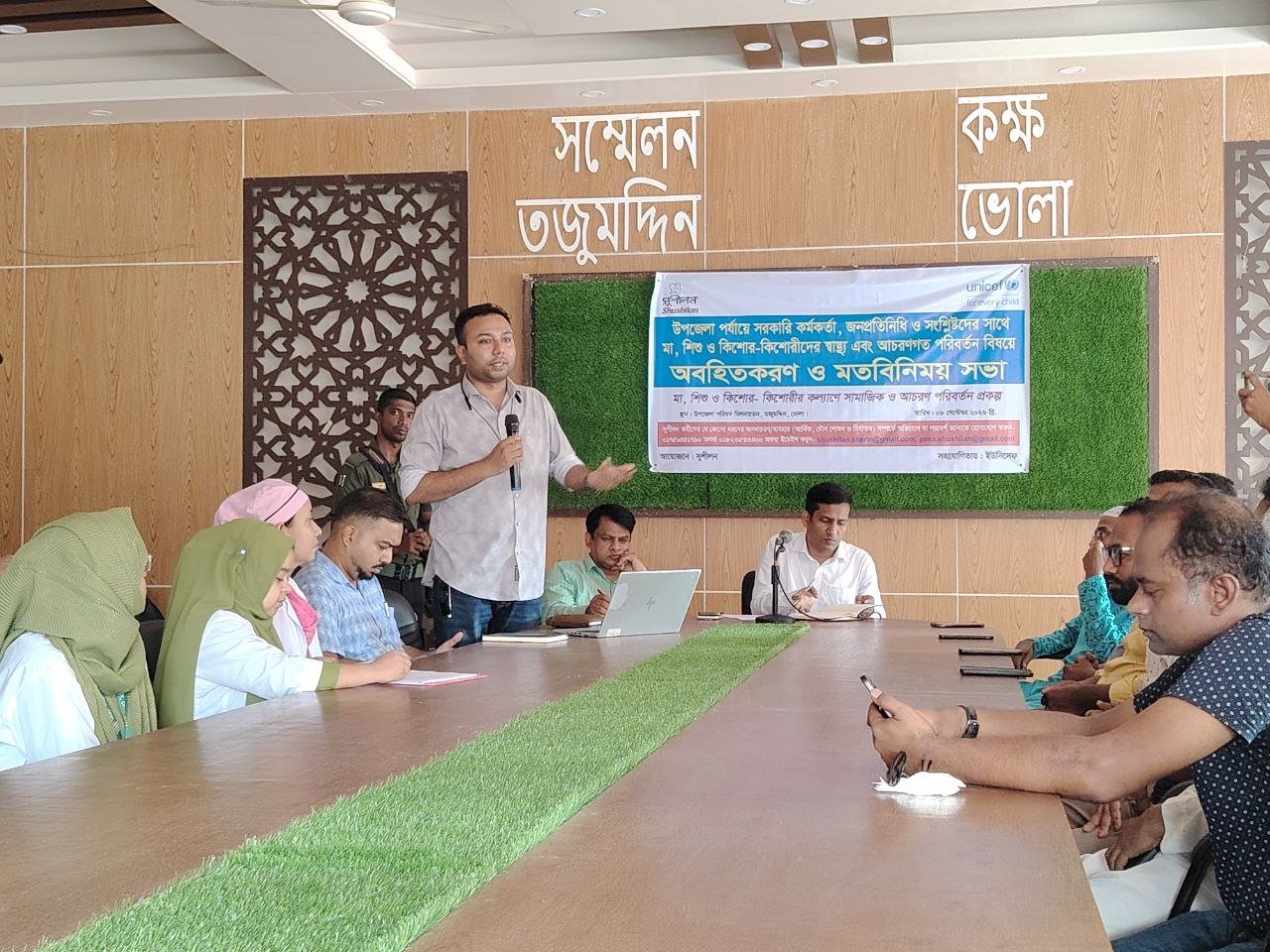
As part of the Social and Behavior Change (SBC) Programme for Promoting Maternal, Children and Adolescent Well-being, Shushilan organized three advocacy & consultation meetings at upazila-level in Charfassion, Lalmohan and Tazumuddin Upazilas of Bhola District during July–September 2026. The initiative aimed to strengthen the engagement of Local Government Institutions (LGIs), government officials and other relevant stakeholders in promoting maternal, newborn, child and adolescent health and well-being.
The consultation & Advocacy meetings sessions provided an important platform for stakeholders to learn about the objectives, key interventions and implementation progress of the SBC Programme. Discussions focused on Maternal, Newborn, Child and Adolescent Health (MNCAH), adolescent well-being, community engagement, social accountability, referral linkages and the role of local stakeholders in promoting positive health and social behaviors.
During the sessions, Mr. Md. Sajib Rahman, Project Coordinator, SBC Programme, Shushilan, delivered a comprehensive project presentation. He highlighted the programme’s major interventions, progress, achievements, field-level challenges and future priorities. The presentation also emphasized the importance of coordinated efforts among government institutions, LGIs, communities and programme stakeholders to address social and behavioral barriers affecting health service utilization.
The sessions were facilitated by Ms. Marufa Sultana, Training & Monitoring Officer, SBC Programme, Shushilan, who moderated the programme and facilitated the interactive discussions. Her facilitation ensured active participation and provided an opportunity for stakeholders to share their experiences, observations and recommendations.
The Upazila Nirbahi Officers (UNO), Upazila Health & Family Planning Officers (UH&FPO) and other relevant government officials shared valuable remarks and recommendations during the sessions. They emphasized the importance of increasing community awareness, ensuring timely utilization of essential health and family planning services, strengthening referral and service linkages, and maintaining close coordination among government departments, LGIs and community-level actors.
The consultations also created an opportunity to share field-level progress, challenges and community feedback with government and local stakeholders. Particular emphasis was placed on strengthening social accountability so that communities can access accurate information, utilize available services and provide feedback on health-related services.
The active participation and constructive feedback from government officials and other stakeholders demonstrated strong interest and commitment to supporting SBC interventions at the local level. The consultations further strengthened coordination, collaboration and stakeholder ownership for improving MNCAH and adolescent well-being.
Overall, the initiative served as an important platform for strengthening government engagement, social accountability and community-focused SBC interventions in Bhola District. Continued coordination and follow-up with government and local stakeholders will be essential to sustain the progress and contribute to meaningful and lasting positive behavior change among communities